
Google Search As You Know It Is Over

The headline of this article comes directly from a recent TechCrunch article, and for good reason.
Here’s another quote from the article: “The era of the ‘ten blue links’ is officially over.”
Google Search is not just becoming more AI-based. It is becoming more conversational, more visual, more agentic, and more task-driven.
That means the search workflow is changing.
For years, the basic search journey looked like this:
A person typed a keyword into Google. Google returned a list of links. The person scanned titles and descriptions. Then they clicked a result.
That was the familiar “10 blue links” model.
Now Google is moving toward a different flow.
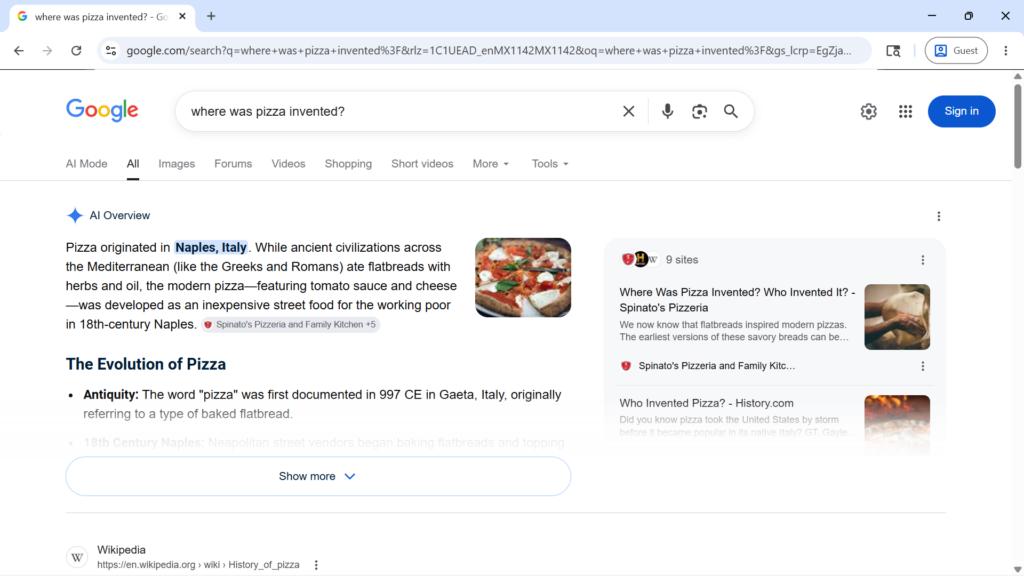
As shown in the image above, a person can start with a normal search and get an AI Overview.
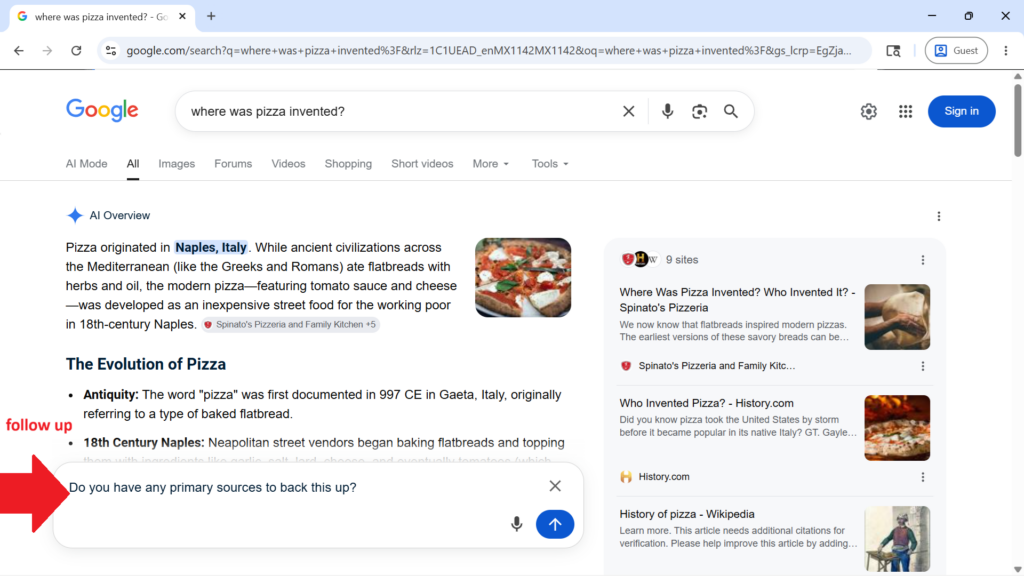
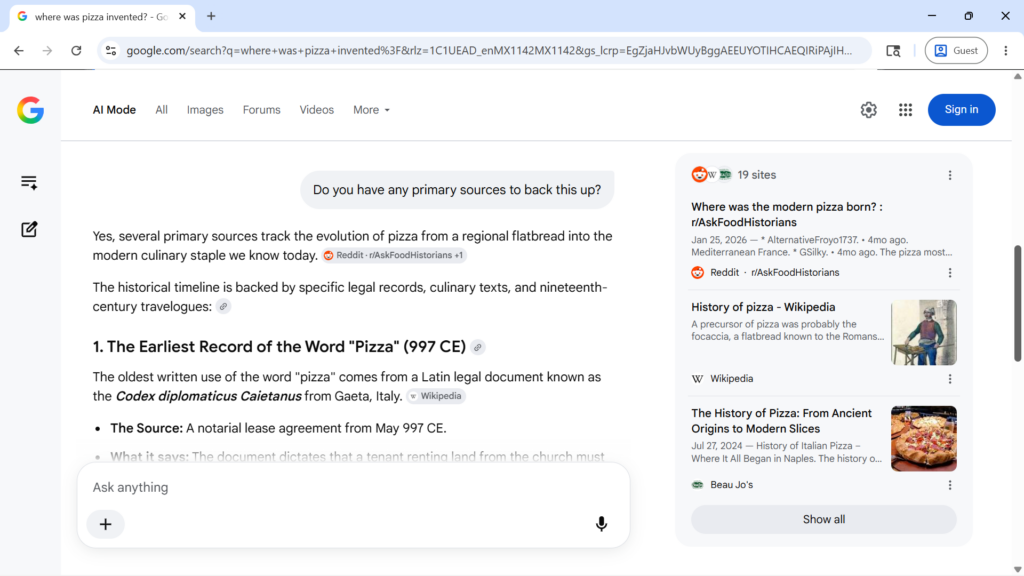
As shown in the images below, after that Overview displays, they can ask a follow-up question directly from that Overview, and then move into AI Mode without starting over. The key part is that the context can be carried forward.
Here is another simple example.
Someone searches:
“best CRM for a small roofing company”
Google may show an AI Overview that summarizes the landscape, mentions a few software options, explains common buying criteria, and provides supporting links.
Then the user asks:
“Which one is best if most of my leads come from Google Ads and phone calls?”
That follow-up is not just a fresh keyword search. It is now a continuation of the original search. Google already knows the user is asking about CRM software for a small roofing company. Now the user has narrowed the criteria around Google Ads, call tracking, and lead management.
That is what I mean by questions flowing into AI Mode.
The user starts in regular Search. They interact with an AI Overview. Then, as they ask a follow-up question, they move into a more conversational AI Search experience where Google can reason through the next layer of the decision.
That matters because search is becoming less linear.
The old model was:
Keyword → rankings → click.
The new model is closer to:
Question → AI Overview → follow-up → AI Mode → comparison → supporting links → possible click.
That is a very different environment for brands.
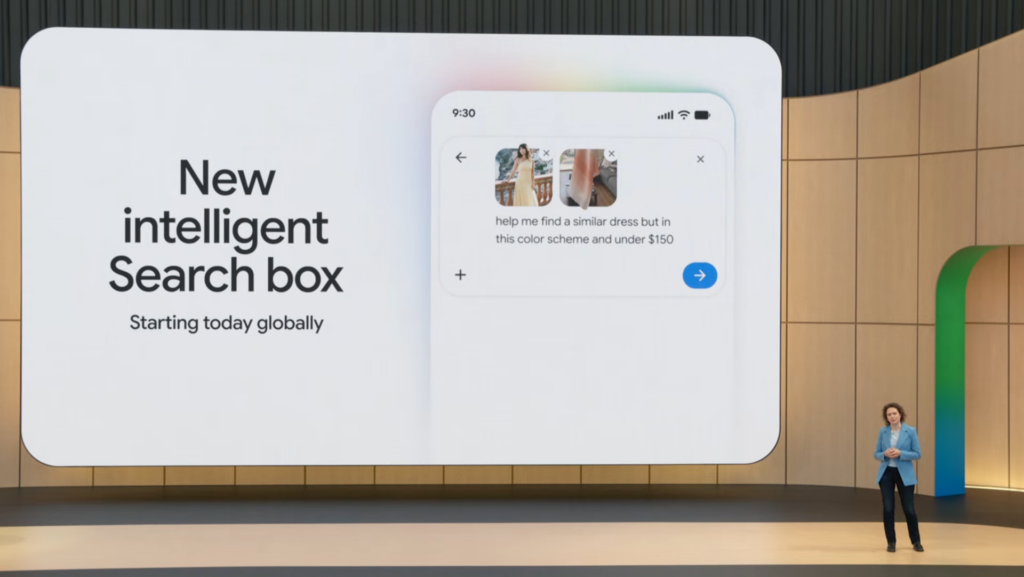
Google also announced an upgraded “intelligent Search box.” This is not just autocomplete with a new coat of paint. The Search box can expand as the user types longer prompts. It can help users formulate more complete questions. It can support text, images, files, videos, and Chrome tabs as inputs.
That means the search input itself is becoming more like a prompt window (similar to the ChatGPT experience).
If someone types a short query, Google can still respond quickly. If someone gives a long, specific prompt, Google can break that prompt apart, run multiple related searches in the background, compare information, and build a more complete answer.
This is where query fan-out matters. Something I’ve been talking about and implementing for a few years now.
Instead of treating one search as one keyword, Google can break a complex question into many smaller related searches. Then it can retrieve information from different parts of the web, compare the information, and synthesize the answer.
That creates a new challenge for SEO.
It is not enough to rank for one obvious keyword anymore.
Your brand needs to be retrievable at the chunk level.
That means your content has to answer the real sub-questions buyers ask when they’re making a decision.
For a local service business, that could mean:
“What does roof cleaning cost in Los Angeles?”
“How long does door replacement take?”
For a SaaS company, that could mean:
“What is the best CRM for contractors under 10 employees?”
“Is this built for a small operator or an enterprise team?”
Those are not vanity content topics. Those are decision topics.
Google also talked about more visual and interactive Search experiences. In some cases, Search may not just return text. It may generate a table, a graph, a simulation, a dashboard, a tracker, or even a small custom tool.
That sounds dramatic, but the business implication is simple:
Google wants to move from just answering questions to helping people complete tasks.
Search is becoming an interface where people can compare, plan, monitor, and act.
There is another quiet but important shift happening here.
Google is expanding Preferred Sources, a feature that lets users tell Search which websites they want to see more often.
At first, this mostly affected Top Stories. Now, Google is bringing that source preference layer into AI Overviews and AI Mode.
That means Search is becoming personalized by more than location, device, history, and query wording.
Users can click this link to opt-in to see more of your website’s relevant content in their search results.
This is not a universal ranking boost.
It means two people can search the same thing and see different sources emphasized because one of them has directly chosen who they trust.
That is a major shift.
So as you can clearly see, brand trust is no longer just something that happens before the search.
It’s becoming part of the search experience itself.
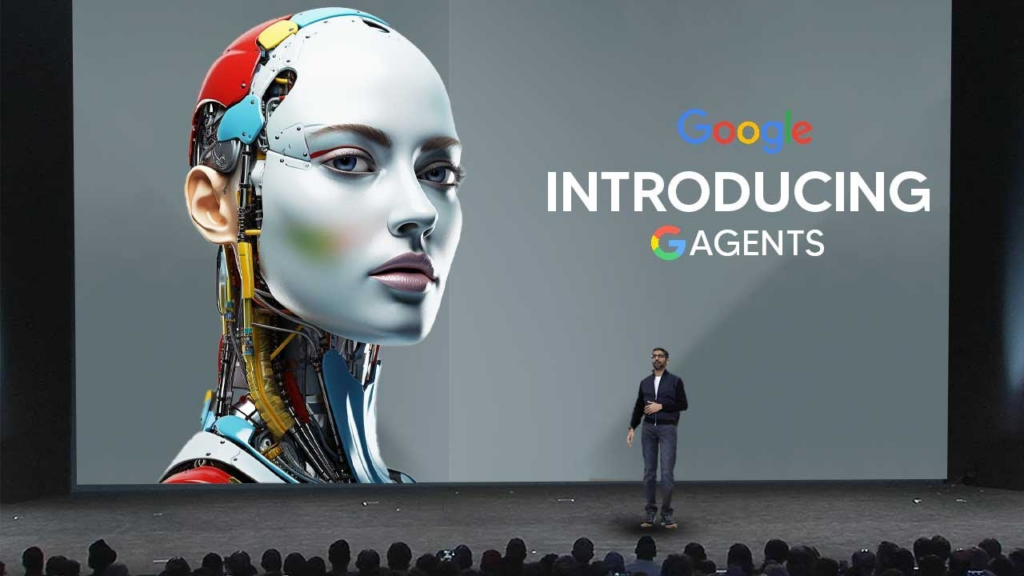
Google also announced information agents. These are AI agents that can monitor the web and alert users when something changes.
For example, a person could ask an agent to watch for a certain apartment listing, a price change, a product drop, or another condition.
At first, some of these agentic features are launching for Google AI Pro and Ultra subscribers.
Google AI Pro is the paid plan for people who want higher access to Google’s AI tools. Google AI Ultra is the higher-end plan with the highest access, more usage, and earlier access to advanced features.
The reason that matters is because the most advanced version of this search behavior may not hit every user all at once. It will likely roll out unevenly by country, language, device, plan, and query type.
So now is the time to adjust your frame of mind around what “Search” consists of.
The question is not “How do I rank for more keywords?”
The better question is:
“How do I make my brand easier for Google, AI systems, and real buyers to retrieve, trust, compare, and choose?”
That means fundamentals still matter.
Clear service pages matter.
Strong internal linking matters.
Real reviews matter.
Helpful FAQs matter.
Pricing clarity matters.
Comparison pages matter.
Case studies matter.
Third-party mentions matter.
Schema can help.
Brand demand matters.
Google Business Profile quality matters.
Content structure matters.
Authority still matters.
The interface changed, but the fundamentals did not disappear.
What changed is the standard.
The brands that win will not be the ones yelling, “I must rank #1.”
They will be the ones becoming easier to retrieve, easier to trust, and easier to choose.
Schedule a call with me directly if you want to construct a custom-fit plan to grow your business in the age of AI search today.

Posted by Caleb Turner
Caleb Turner is the founder and owner of SEO Rank Media, a results-focused digital marketing agency specializing in SEO, PPC, and AI-ready search visibility. With over a decade of experience helping businesses improve rankings, traffic, and online growth, Caleb is known for using customized, data-driven strategies instead of generic SEO playbooks.