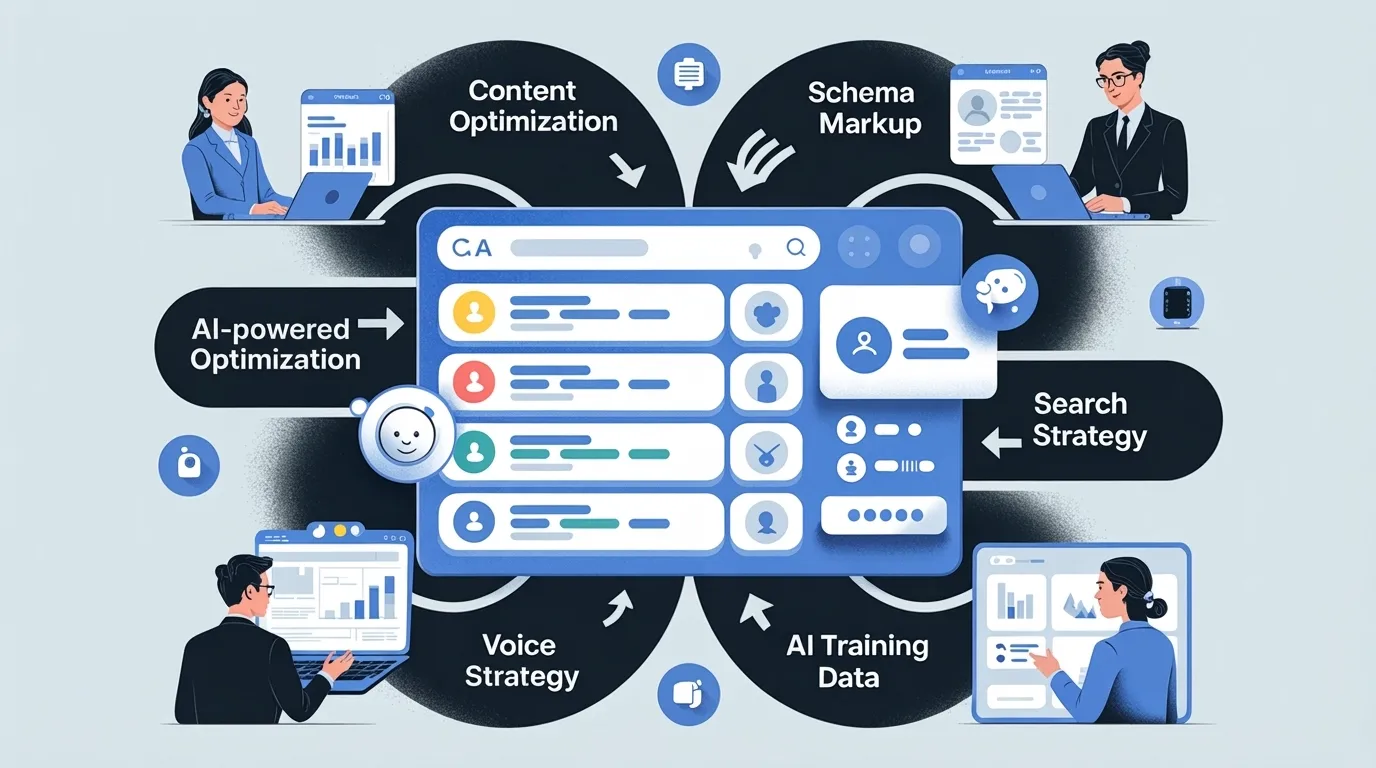
The New Local SEO Reality: AI Up Top, Trust Still Underneath

If you want the short version, here’s what I’m seeing right now. Local SEO is still very much alive, but the way people discover and choose local businesses is changing. Google is moving toward a more conversational, AI-engine experience, so it’s not enough to just rank anymore. Your business also needs to be easy for Google to understand, easy for AI systems to summarize, and easy for real people to trust.

I recently sat down with Darren Shaw from Whitespark, and the conversation reminded me why local SEO is still one of the most valuable parts of search. 

Darren has been in this space long enough to see local search evolve from simple map pack tactics into a much more sophisticated system of proximity, relevance, reviews, business data, and now AI recommendations.

That kind of perspective matters to me. A lot of people in SEO get distracted by the latest acronym or trend, but what I appreciate about Darren is that he has seen enough cycles to know what actually holds up over time. 


The main takeaway of the conversation was pretty simple. AI is changing the way people experience search, but it is not replacing strong local SEO fundamentals. If anything, it is making them even more important.

The local search interface is changing
Google maps, maps. SEO, AEO, GEO

The local search interface is changing because people are no longer limited to short keyword searches like “plumber near me” or “dentist Dallas.” They are asking longer, more specific questions. They want recommendations based on urgency, preference, trust, location, availability, and context.

That changes the job of local SEO.

For a long time, local SEO was mostly about ranking in the local pack for short keywords. I still think that matters. I just don’t think it tells the whole story anymore. In an AI search environment, the bigger question is whether the system understands your business well enough to recommend it in the right situation.

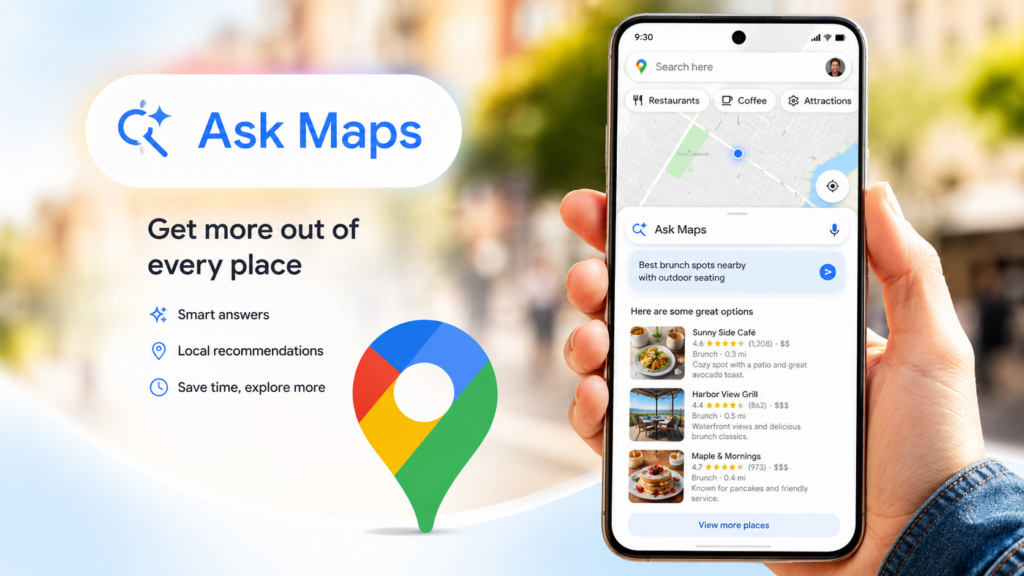
That’s why I think Google’s Ask Maps feature matters. Google is turning Maps into a Gemini-powered conversational experience where people can ask real-world questions about places and get personalized recommendations based on Maps data. To me, that’s a pretty clear signal. Maps is becoming more than a directory. It’s becoming an AI search layer that helps people make real-world decisions.

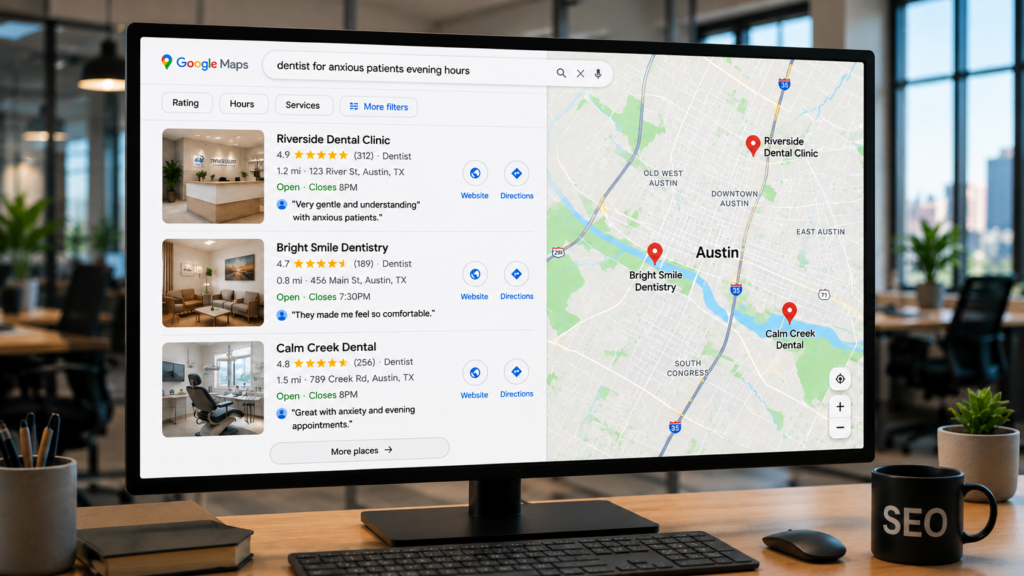
When I look at a search like finding a nearby dentist who is good with anxious patients and offers evening appointments, I see a very different kind of intent than a simple “dentist near me” search. The practice that wins that query is usually not just the one closest to the person searching. It is the one with the clearest service information, the strongest reviews, useful supporting content, and enough trust signals that Google feels confident recommending it.

That’s where local SEO is headed.

Local SEO was never just about ranking
GEO, AEO, search, maps, local SEO

I never viewed local SEO as just a rankings play. A local business does not win because it shows up. It wins when someone chooses it. Rankings give you visibility. Selection is what turns that visibility into revenue.


That’s where I see a lot of businesses get stuck. They obsess over where they appear and ignore how they look when a real customer starts comparing options. You can rank well and still lose the lead if your Google Business Profile feels thin, your reviews do not build trust, your photos look outdated, or your service details do not answer the question the buyer actually has.

That matters even more now because AI-driven local search is not just about retrieving businesses. It is comparing them. It is summarizing them. It is trying to decide which option looks most useful for the person searching.

So when I look at local visibility, I want a business to be built for both retrieval and preference. Retrieval means Google can find it and understand it. Preference means the system has enough confidence to show it as the better fit. That’s the standard I care about.

Reviews are one of the strongest trust layers in local SEO
Reviews, customers, AEO, SEO, GEO

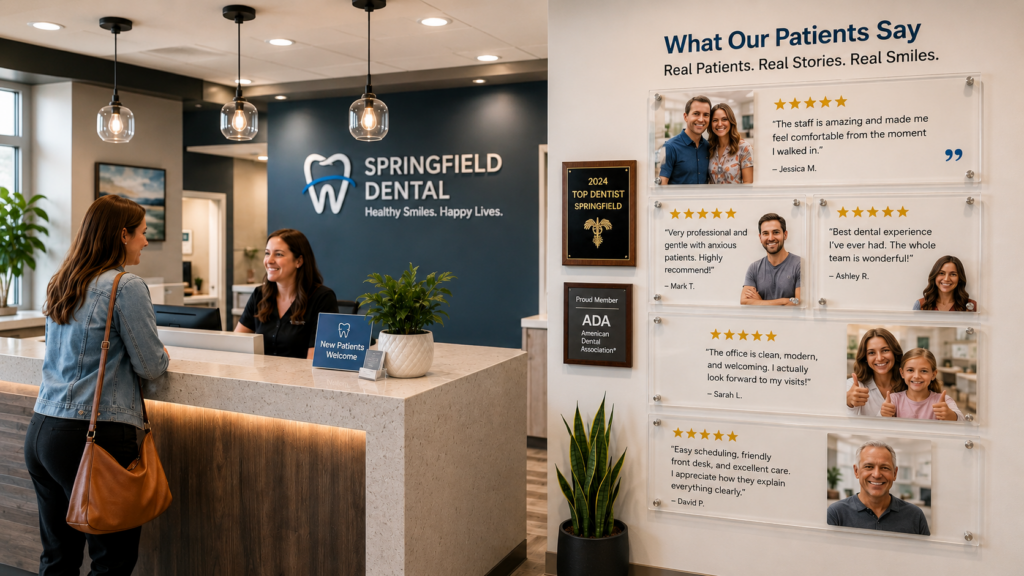
I think reviews are one of the strongest trust layers in local SEO because they influence both rankings and conversions. Darren made that point clearly in our conversation, and I agree with him completely.

A lot of business owners still think about reviews as reputation management. That is part of it, but it’s not the whole story. Reviews are also content. They capture the real customer experience in natural language. People talk about services, staff, neighborhoods, problems, outcomes, wait times, pricing concerns, and the reasons they chose that business in the first place.

That kind of language helps customers decide, but it also helps search systems understand the business at a deeper level.

If patients keep saying a dental office is great with nervous patients, that is a meaningful signal. If homeowners keep mentioning emergency roof repair after storms, that matters too. If restaurant customers keep bringing up gluten-free options, fast service, parking, or atmosphere, that gives useful context.

I think this matters even more in AI local search because the query is getting more conversational. People are not just searching for a category anymore. They’re looking for the right fit.

Review recency matters more than most businesses realize
Reviews, AEO, SEO, GEO

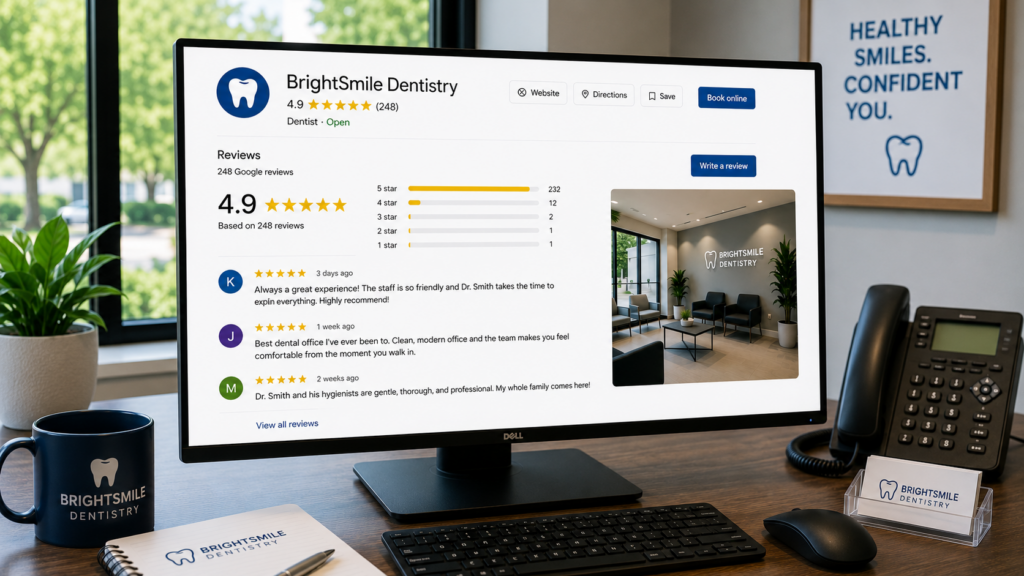
Review recency matters more than most businesses realize because customers and search systems both care about what’s happening now. A business with a large review count but no recent activity can look stale. A business with fewer total reviews but consistent new reviews can look active, trusted, and relevant.


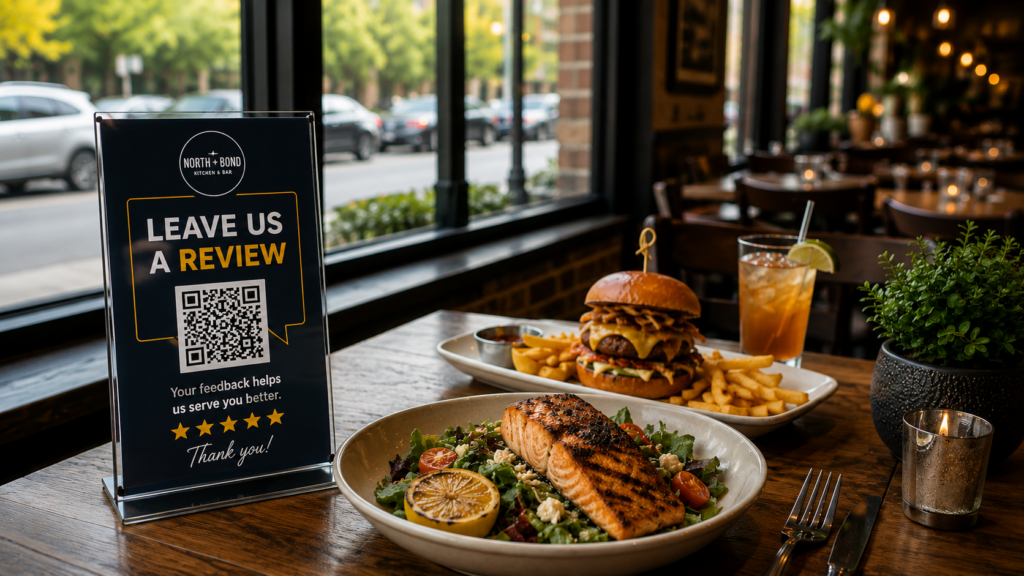
That does not mean businesses should chase reviews in a sloppy or aggressive way. It means review generation should become part of the operating process. Ask at the right time. Make it easy. Train the team. Use a simple review link or QR code when appropriate. Follow up naturally. Keep the process tied to real customer experience.

The mistake is treating reviews like a one-time campaign. Reviews should be a steady signal that the business is active, trusted, and still delivering.

That is especially important in competitive local markets where every business claims to be the best. Reviews give buyers and AI systems a stronger reason to believe one business over another.

Your Google Business Profile has to be built like a conversion asset
Restaurant, reviews, GEO, AEO

I look at a Google Business Profile as a conversion asset, not a box to check. A lot of local buyers decide who to call before they ever spend much time on a website, so the profile itself has to help you win the click, the call, or the visit.


That is one reason local SEO has been more protected from AI disruption than pure informational SEO. If someone wants a definition or a basic how-to answer, AI may handle that without sending the user anywhere. But if someone needs a dentist, lawyer, plumber, med spa, restaurant, HVAC company, or roofer, they still have to choose a real business.

And a lot of that choice happens inside Google.

Your categories, services, products, photos, reviews, posts, hours, attributes, and business description all shape that decision. Some of those elements can affect rankings. Others do more of the conversion work. I care about both.

I see too many businesses treat their Google Business Profile like a one-time setup task. They choose a category once, add a few photos, write a generic description, and move on. Then they wonder why competitors with stronger profiles keep getting the calls.

That’s not how I approach it.

If your profile is one of the main places customers compare you, it needs to be built intentionally and managed like a living visibility asset.

Categories can quietly make or break local visibility
Categories, AEO, GEO, SEO

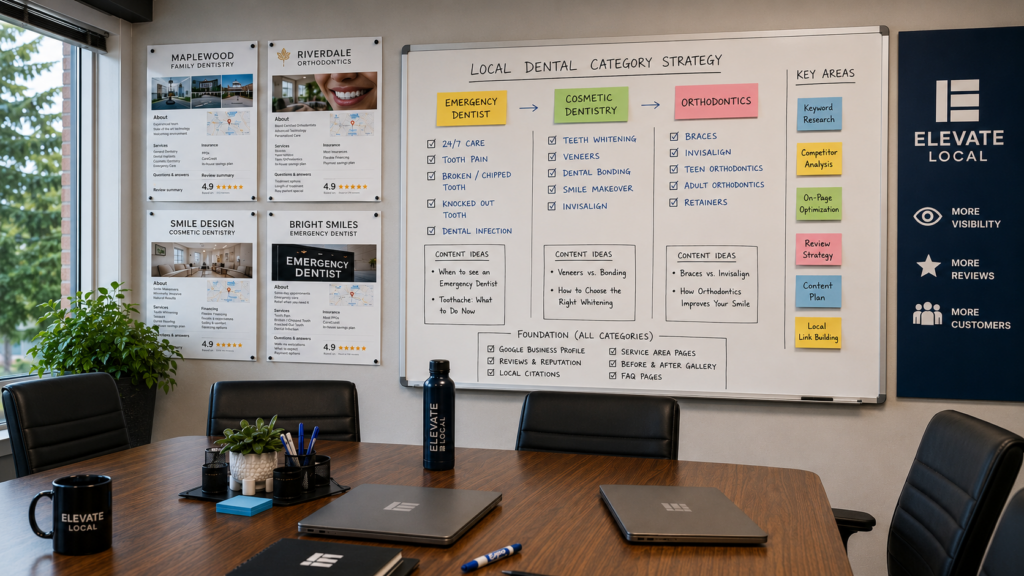
Categories are one of those local SEO details that seem small until they start costing a business real visibility. I check them early because they tell Google what kind of business it is. If the primary category is too broad or just not aligned with the core offer, you can create a relevance problem before anything else even gets a chance to help.


I see this a lot. A law firm selects “law firm” when the better fit might be personal injury attorney, criminal justice attorney, or bankruptcy attorney. A dental practice might not reflect the services it actually wants to be found for, which means it can miss visibility for higher-intent searches tied to emergency dentistry, cosmetic dentistry, implants, or orthodontics.

This is one of the first things I look at in a local SEO audit because it’s simple, but the impact can be significant. The primary category needs to match the main thing the business wants to be found for. Then the supporting categories, services, website content, reviews, and citations all need to reinforce that same relevance. That’s how I help close the gap between what a business offers and what Google understands.

Citations are still useful, but they are not a magic shortcut
Citations, GEO, AEO, SEO

Citations still matter, sure, but I don’t look at them as the shortcut they used to be in local SEO.


I think of them as trust and legitimacy signals.

If a business only shows up on its website and Google Business Profile, that’s a pretty thin footprint. If the same business information shows up consistently across major directories, industry platforms, local sources, review sites, and other trusted third-party profiles, the business looks more established and easier to verify.

I think that matters for Google. I also think it matters even more as AI systems take a bigger role in local discovery.

What I would not do is push a business into hundreds of weak directories just to inflate the count. I would focus on building a clean, consistent presence in the places that actually matter. That usually means major business directories, relevant local sites, industry-specific platforms, review sources, and professional associations.

The right mix depends on the business. If I am working with a lawyer, I am looking at legal directories. If it is a dentist, I want healthcare-related profiles. If it is a home services company, I am thinking about home services platforms, local associations, and trade directories.

I am not after volume here. I am after confidence.

AI local search rewards complete information
AI local search, AEO, GEO, SEO

AI local search rewards complete information because conversational searches need more context.


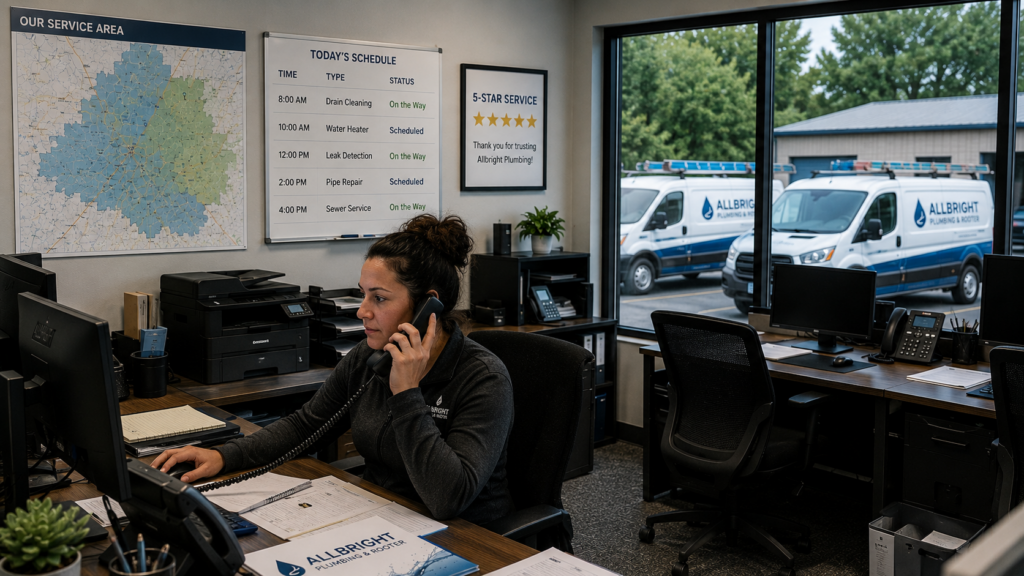
A short keyword search might only need a service and a location. But if someone is looking for the best emergency plumber nearby who can come out tonight and has strong reviews, the system has a lot more to evaluate. It has to understand the service, the urgency, the area, the availability, the review quality, and whether the business looks trustworthy.

If your business does not communicate those details clearly, you are asking Google and AI tools to fill in the blanks. I do not like building marketing strategies around guesswork. I would rather feed the system better information.

That starts with the basics. I want the website to answer real buyer questions. I want the Google Business Profile to list clear services. I want reviews that are recent and specific. I want citations to stay consistent. I want photos that build trust. And I want the content to explain who the business helps, what it does, where it works, and why someone should choose it.

This is not about stuffing keywords into every sentence. It is about making the business easier to retrieve, understand, compare, and recommend.

That is the difference I see between old local SEO and local SEO built for AI search.

Old SEO tactics are not enough by themselves
SEO tactics, GEO, AEO, search

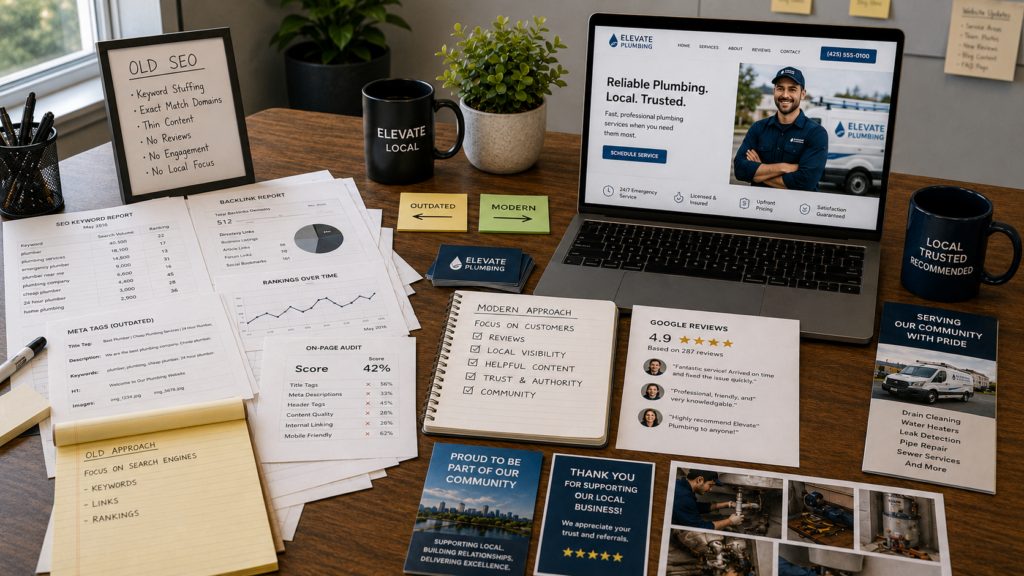
Old SEO tactics are not enough on their own anymore, especially in local search. Google is doing more than matching words. It’s getting more interpretive. It’s trying to understand the business itself, the context around the search, the evidence behind the claims, the sentiment around the brand, and whether the fit is actually right for that customer’s need.


That does not make traditional SEO useless. I still care about the fundamentals. Technical health matters. Crawlable pages matter. Strong content matters. Internal linking, backlinks, local relevance, and clean business data all still do real work.

But now I see those pieces as support for something bigger.

I am not just asking if a business can rank for a keyword. I am asking if Google would feel confident recommending that business for a specific situation.

That shift changes how I approach local strategy.

A generic service page is not enough. A thin Google Business Profile is not enough. A few old reviews are not enough. A list of locations without real local proof is not enough.

If a business wants to win, it has to become the clearest and most credible answer for the situations it wants to own.

That’s the work.

The biggest opportunity is fixing selection, not just visibility

Visibility, AEO, GEO, SEO

The biggest opportunity is fixing selection, not just visibility. Most businesses want more rankings, but many of them are already leaking leads from the visibility they have.


If your profile gets impressions but few calls, that is a selection problem. If people click your profile but choose a competitor, that is a selection problem. If you rank locally but your reviews, photos, services, and website do not build confidence, that is a selection problem.

This is why I don’t separate SEO from conversion.

A stronger review profile can improve trust. Better photos can reduce hesitation. Clearer services can increase relevance. Better website content can support both users and AI systems. Stronger citations can reinforce legitimacy. A better Google Business Profile can turn more visibility into actual leads.

That is how local SEO should be judged.

Not just “Did rankings move?”

The better question is, “Did the business become easier to find, trust, and choose?

Local SEO is getting more conversational, more personalized, and more influenced by AI, but the goal is still the same. I want the right customers to find your business, trust what they see, and feel confident choosing you.


What has changed is the standard. If you want to show up well in AI local search, your business needs complete information, recent reviews, accurate categories, clear service details, consistent listings, and content that answers the real questions people ask before they ever contact you.

If you want a practical game plan, schedule a call with me. I’ll show you where your local visibility is leaking, what is keeping your business from being preferred, and which fixes I would prioritize first.
The Two Arenas of AI Search Optimization and the Process I Use to Win Both

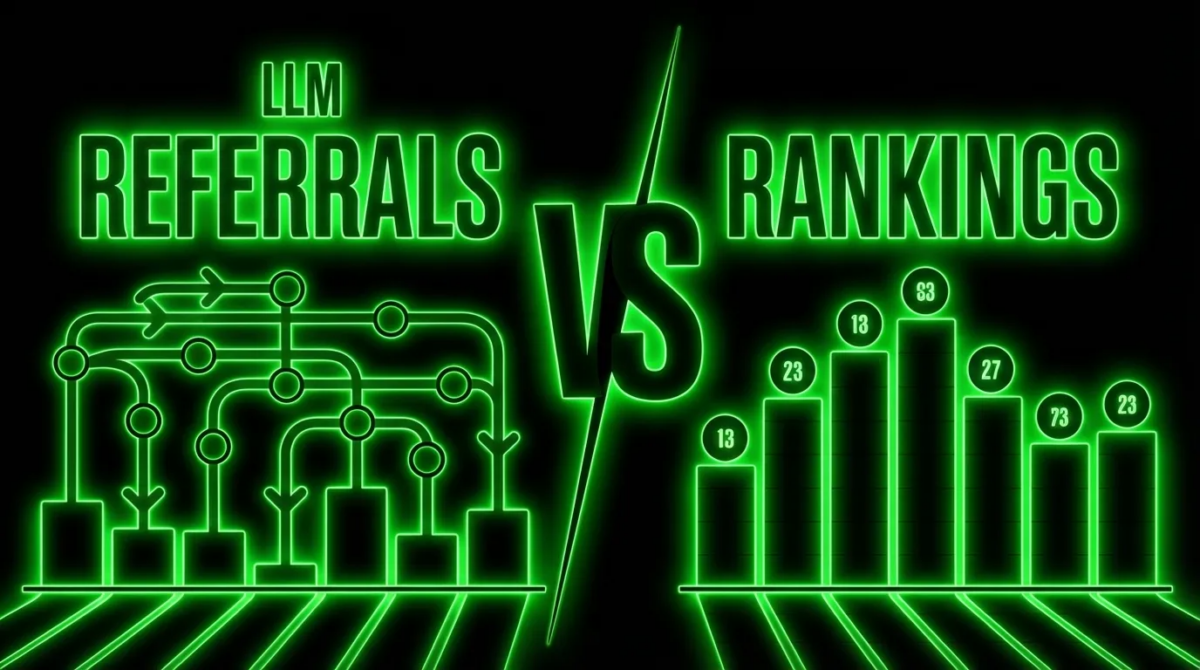
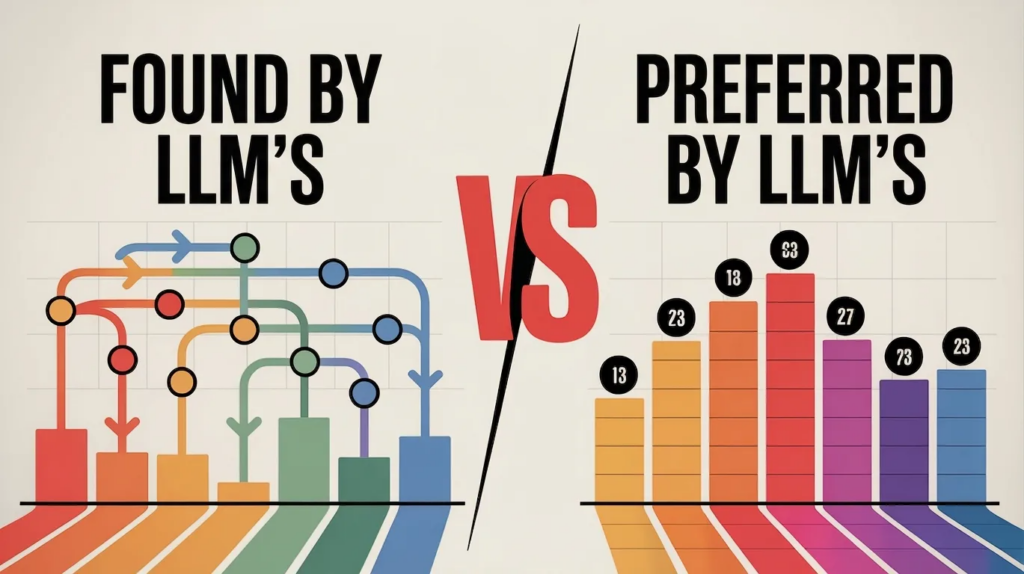
If you want to win in AI search, you have to win two distinct, but related arenas. Getting retrieved and getting preferred.

I don’t treat AI visibility like a vanity ranking game. I care more about whether a brand is consistently pulled into the right conversations and preferred for high intent prompts.

The research supports that approach. The 2023 GEO study introduced Generative Engine Optimization and reported visibility gains of up to 40% from the right optimization methods.

The E-GEO: A Testbed for Generative Engine Optimization in E-Commerce study found that intent match, factuality, differentiation, and scannable formatting consistently improved ranking outcomes.

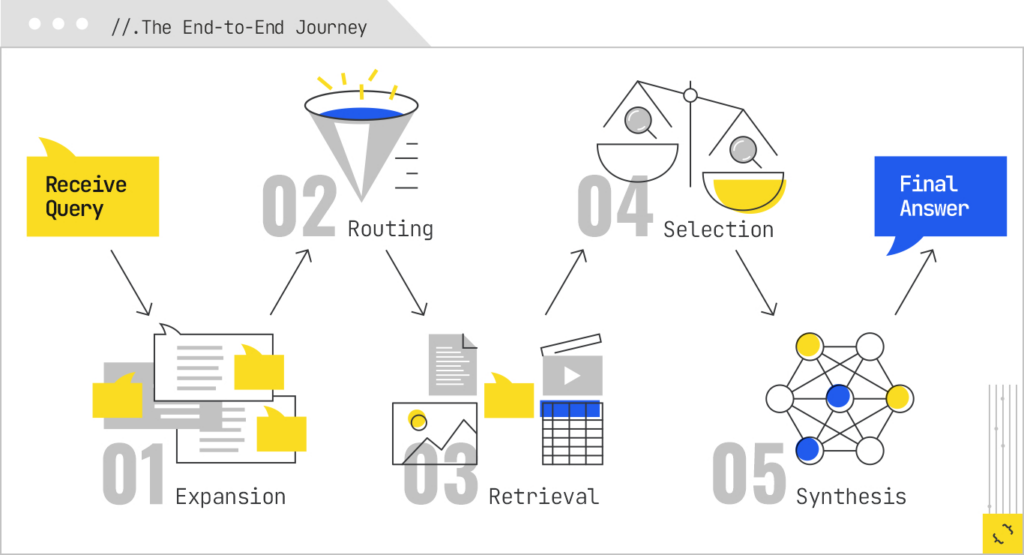
I look at AI search as a two-step system.

First, your brand has to get retrieved. That means your site, brand, or page has to make it into the possible answer set. Then, once you are in the set, you have to get preferred. That second step is the re-ranking layer, where the model decides which option is the clearest fit for the user’s prompt. The 2025 E-GEO paper formalizes that same retrieval-plus-ranking framework.

That is why I don’t separate off-page SEO from on-page AI optimization. Off-page authority, mentions, citations, links, and digital PR help you get pulled in. Clear, well-structured, evidence backed content helps you get chosen once you are there.

LLM difference

I do not chase vanity rankings. Ranking for a head term like IT managed services might look good in a dashboard, but it tells me almost nothing about whether I am visible when a real buyer is actually close to choosing a provider. 

People looking to purchase are not stopping at short category phrases anymore. They are asking long, detailed, constraint-heavy buying questions like:

 “We run a 12-location healthcare group in Dallas and need a HIPAA-compliant IT provider that can manage endpoints, harden Microsoft 365, support audits, and help with compliance documentation. Who should we talk to?” 

“Which Dallas managed IT companies can provide backup and disaster recovery with a one-hour recovery time objective, a 15-minute recovery point objective, and 24/7 incident response?” 

“We need a managed cybersecurity partner for a multi-site medical practice that can handle SIEM, endpoint detection, phishing training, and policy documentation. Who actually does all of that well?” 

This shift is not a theory anymore. Amazon says shoppers are already using Rufus to type natural-language questions, compare options, and ask granular product questions, while Bain found that 42% of large language model users already use these platforms for shopping recommendations.

In other words, I care less about whether I “rank #1” for a trophy keyword and more about whether search engines and large language models consistently understand that my brand is a strong answer for the high-intent situations my market actually cares about. That is what matters.

Query journey

The process I use to increase AI visibility

My process starts with query selection, not page editing.

First, I identify the money prompts. These are the commercial, comparison-driven, bottom-of-funnel queries that reflect how people actually ask for help today. Then I expand those into related prompt variations so I can see the full intent map around the topic. 

After that, I compare my page against competing pages and measure which page is most semantically aligned to the query. If my page is weak, I do not guess why. I fix the relevance gap.

Then I optimize at the chunk level.

Modern AI systems often retrieve and reuse sections, not entire pages. That is why I built an internal workflow that pulls strong content chunks, scores them against the target query, rewrites the best chunk into cleaner formats, and then re-ranks the outputs to identify the version most likely to be extracted and preferred.

In practice, the best version is usually the one that is easiest to scan, easiest to trust, and easiest to quote.

What I like about the 2025 E-GEO study is that it pushes the conversation beyond hype.

The researchers tested more than 7,000 realistic product queries, evaluated 15 common rewriting heuristics, and found that the best results came from a stable pattern rather than a gimmick. The content that rose tended to align closely with user intent, preserve factual accuracy, clearly differentiate itself, and present information in a format that is easy for the model to process.

I have had conversations in person and even on my YouTube channel with industry-leading colleagues like Nick Eubanks, Ross Simmonds, and Charles Floate, and even when the tactics vary, the same fundamentals keep coming up: build authority beyond your site, understand how people really search, and publish content that is clear enough to be reused in answers.

That is a big reason I believe AI visibility is not a trick. It is a discipline.

GEO optimization

You need distribution. You need credibility. You need answer-ready content. And you need to stop measuring success with outdated vanity metrics that were built for a different search era.

AI visibility is not about gaming one prompt or chasing one keyword. It is about increasing the probability that your brand gets retrieved for the right conversations and is preferred when the model compares options.

Parent/head terms still matter as category and entity anchors for retrieval, internal linking, and query reformulation, but they do not deserve to be your primary measurement system for AI-era revenue visibility. 

The KPI should be whether your brand is retrieved and preferred across the high-intent prompt set that real buyers actually use.

That means winning both arenas: off-page presence strong enough to get you into the set, and on-page structure strong enough to move you to the top.

That’s the process I use, and it’s the process I keep seeing validated by research, by testing, and by conversations with other people deep in this space. If you focus on those fundamentals, you stop chasing vanity and start building visibility that actually compounds. Schedule an introductory call with me today to discuss how we can do this for your brand.

What the 2025 GEO Study Reveals About Ranking in AI Answers (and How I Apply It)

A 2025 research study from researchers at MIT and Columbia University tested what actually moves content up in AI-generated rankings. Their big finding wasn’t “use this one weird prompt.” It was that repeatable, reliable gains come from a consistent structure: match user intent, stay factual, show clear differentiation, use evidence, and format content so it’s easy to extract.

I built a custom internal tool inspired by that study to help me (and my clients) turn messy, long-form information into “AI-ready” answer blocks that are more likely to be pulled and preferred in AI results. We’re actively expanding that tool to make it more comprehensive, and it’s already being used to guide client content.

I’ve spent the last couple of years watching the same pattern play out across industries:

    • Some brands get mentioned in AI answers… but show up as the third or fourth recommendation.

    • Others get pulled sometimes… but inconsistently.

    • And a few dominate because their content is the easiest to trust, quote, and rank.

That’s why I pay attention when researchers publish something that goes beyond opinions and actually tests what works.

The research team from MIT and Columbia University ran the study (E-GEO: A Testbed for Generative Engine Optimization in E-Commerce) to measure how answer engine rankings change based on how content is written. They used thousands of real-world shopping-style queries, rewrote product descriptions using different approaches, and tracked whether the rewritten versions moved up or down in AI rankings.

What I’m sharing below is the practical version of what matters, and how you can apply it whether you sell products or services.

The two-step reality: getting pulled vs getting preferred

RAG process

Most brands only think about one part of the problem.

Step 1: Retrieval (getting pulled in)

This is whether your page, brand, or product even gets included as a possible answer.

Step 2: Re-ranking (getting preferred)

This is where the AI decides what’s “best,” “second best,” and so on.

The 2025 study focused heavily on that second step: once options are in the set, what makes one rise to the top?

If you’re investing in content for AI visibility, you want both:

● content that reliably gets pulled
● content that reliably gets ranked as the preferred option

What the researchers actually did (in plain English)

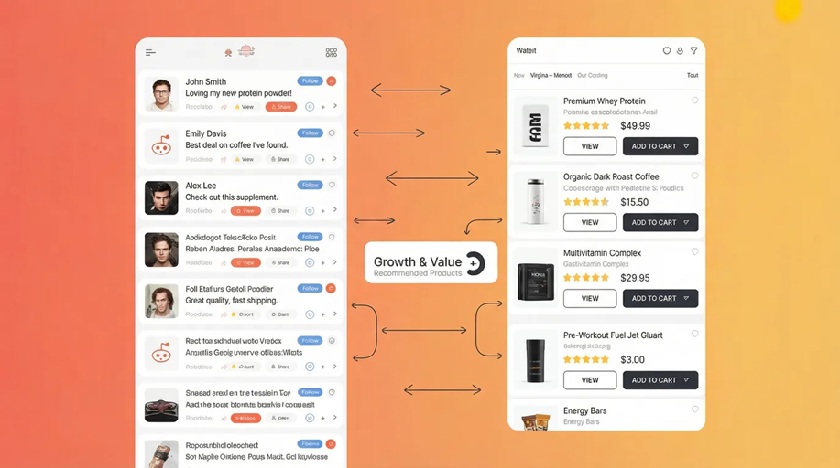
Reddit queries matched to Amazon Listings
Here’s the simple version of the test:

    1. They took 7,000+ real “what should I buy?” style posts from Reddit.
    2. They matched each query to the 10 most relevant Amazon product listings using a semantic similarity method (basically, “meaning match,” not just keyword match).
    3. They rewrote product descriptions using different prompt styles.
    4. They measured whether the rewritten descriptions moved up in the AI’s ranking.
    5. They then used a second model to iteratively improve the rewrite prompts until the rewrites performed better.

The purpose wasn’t to find a trick. It was to find patterns that hold up repeatedly across many queries and products.

That’s exactly what brands need right now, repeatable rules, not hype.

The most important practical takeaway

ranking in ChatGPT

AI rankings reward content that makes it easy to confidently choose and easy to quote.

That’s why the winning patterns consistently included:

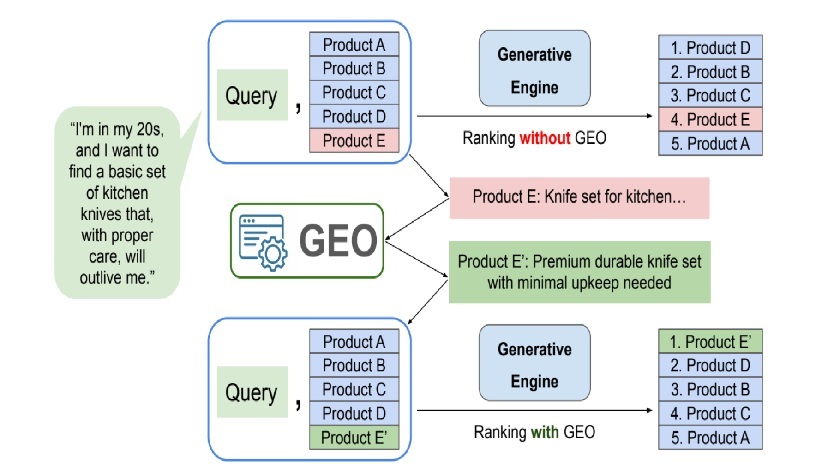
1) Clear intent match

The best-performing rewrites aligned tightly with what the user actually asked for, especially long, conversational queries with constraints.

Not “Knife set for kitchen.”

More like:
“Premium durable knife set with minimal upkeep needed.”

That shift matters because it directly mirrors the user’s real goal.

2) Factual grounding

One of the most consistent themes was factuality. Keep claims accurate, avoid embellishment, and preserve what can be supported.

In real life, that means:

● don’t guess
● don’t inflate benefits
● don’t claim “best” without support

3) Clear differentiation (your “why us” without fluff)

Competitive positioning mattered, especially when it was expressed as concrete differences, not generic marketing language.

Examples:

● materials, specs, certifications
● what’s included vs not included
● warranty terms
● durability, maintenance requirements
● constraints the product/service is best for (and not best for)

4) Evidence signals

When you can back something up with data or reputable references, do it. Evidence helps the AI system “trust” the content and reuse it.

For service businesses, evidence can be:

● licensing and certifications
● documented process steps
● before/after metrics
● review volume and rating
● pricing ranges and what drives them

5) Scannable formatting

This one is huge, and it matches what I’ve seen in the wild. Content that’s easy to scan is easier for AI systems to lift into answers.

Headings, bullets, short blocks, ranges, and direct definitions beat long paragraphs every time.

What didn’t work as well

GEO and AEO Heuristics that did not work well

A lot of “internet advice” about AI visibility leans into tone or style:

● “Write like an ad”
● “Be super persuasive”
● “Tell a story”
● “Sound authoritative”

The study showed that these approaches can be inconsistent and, in some cases, can even hurt performance if they reduce factual clarity or drift away from the user’s intent.

The takeaway: style is secondary; structure and usefulness come first.

The custom tool I built (inspired by the study)

meta optimizer for GEO and AEO

This study didn’t just confirm what I suspected; it gave me a structure I could build around.

So I built an internal GPT-powered re-ranking workflow inspired by the study’s re-ranking logic.

Here’s what it does in practical terms:

What my tool does today

    1. I feed it a target query (example: “How much does carpet cleaning cost in Northern Virginia?”).
    2. It ingests multiple content “chunks” pulled from top-performing pages on Google.
    3. It ranks those chunks based on which one most directly and completely answers the query.
    4. It rewrites the best chunk into multiple output formats, especially.
    5. It re-ranks the outputs and recommends the version most likely to be extractable and preferred in AI answers.

In short, it helps us consistently produce content that is accurate, aligned with intent, and formatted for extraction, which is exactly what the study suggests is repeatably effective.

How we’re expanding it

Right now we’re expanding the workflow to be more iterative and mathematical about which content is most optimized. This will result in:

● content that more accurately reflects what AI engines reward
● stronger evidence handling
● consistency checks
● broader content formats

How we’re using it for clients

We’re already using this tool in our client work to:

● upgrade existing pages into AI-ready “answer-first” structures
● produce scannable sections that AI engines can quote cleanly
● reduce fluff while increasing proof and clarity
● align content with how people actually ask questions in AI tools

This is one of the ways we’ve been able to move faster while staying grounded and factual, because the tool forces discipline around intent, structure, and evidence.

Final thoughts

ai seo

The 2025 MIT + Columbia E-GEO study supports something I’ve been emphasizing for a while:

If you want to rank well in AI answers, your content has to do more than “sound good.” It has to be the clearest match to the user’s intent, backed by facts, and formatted in a way that’s easy to extract and trust.

That’s why I built a tool around this and why we’re expanding it and using it actively in client content.

If you want your site to show up more often and be preferred in AI answers, request my free AI visibility checklist. I’ll review your site and tell you:

● what’s preventing AI engines from pulling your pages
● what’s keeping you from being ranked as the “top” recommendation
● which pages to fix first for the fastest impact

You can implement the changes yourself, or my team at SEO Rank Media can handle it for you.

Answer Engine Optimization (AEO) Explained: What It Is, What Services an AEO Agency Provides, and Who Needs It

Answer Engine Optimization (AEO)—sometimes called AI search optimization or Generative Engine Optimization—helps your brand, products and services appear in AI‑generated answers by structuring content, data and authority so that AI systems can understand and quote it. For companies seeking an AEO agency in Los Angeles, this article explains what AEO is, what services agencies provide and who benefits from them.

Key Takeaways

    • AEO ensures your brand appears in AI‑generated answers and voice assistants.

    • It complements SEO and paid ads by helping you get chosen, not just found.

    • AEO agencies align content, entities and structured data for AI comprehension.

    • B2B SaaS, professional services, high‑consideration products and local services benefit most.

    • When hiring an AEO agency in Los Angeles, ask about outcomes, schema, content structure and measurement.

AI search is changing how people find products and services. More than 60 percent of Google searches now end without a click, and voice or conversational queries will account for roughly half of all queries in the coming years. When a buyer types “best onboarding software” into an AI‑powered platform such as Perplexity or ChatGPT, the answer engine doesn’t show a list of blue links, it gives a curated comparison. If your brand isn’t mentioned in that answer, you don’t even exist to that buyer.

That’s where answer engine optimization comes in. AEO prepares your content and entities so AI systems understand them, cite them and include them in answers. This explainer will demystify AEO in plain language, compare it to traditional SEO and paid ads, outline what an AEO agency does, describe who needs this service, and provide practical guidance on hiring the right partner.

What “AEO” stands for (in plain English)

AEO acronym for answer engine optimization


In simplest terms, AEO is the practice of making your brand, products and information easy for AI-powered search engines to understand and quote. Unlike traditional search engine optimization (SEO), which focuses on getting your website to rank in the top positions of a results page, AEO increases the probability that your information is selected and presented inside AI‑generated answers. Instead of only being concerned with clicks, AEO also aims to get your brand mentioned or cited by answer engines.

AEO in practice

When someone asks an AI engine, “Which accounting software should a Los Angeles–based startup use?” the model quickly scans its knowledge sources, decides which entities and products are relevant, and then constructs a concise answer. A company optimized for AEO will have:

    • Clear entities—The company name, product names, modules, and key use cases are defined consistently across its website and third‑party profiles.

    • Structured data—Pages include schema markup (e.g., FAQ, Product, Organization, HowTo) that tells AI engines exactly what each piece of content is about.

    • Answer‑ready content—Content is formatted using question‑and‑answer style summaries, concise bullet lists and headings that align with the questions buyers ask.

Because of these signals, the answer engine can quickly extract the relevant information and highlight the brand in its summary. That is the essence of AEO: help AI help your customer find you.

AEO vs. SEO vs. paid ads: what’s different

SEO, AEO, and paid advertising all aim to put your business in front of potential customers, but they operate differently. The table below summarizes the core distinctions.

Approach Goal Target surfaces Optimization techniques Typical outcome
Search Engine Optimization (SEO) Improve rankings in traditional search results Google/Bing organic results Keyword research, on‑page optimization, link building, technical SEO Drives clicks to your website to read longer-form content
Answer Engine Optimization (AEO) Get included in AI-generated answers and voice responses AI Overviews, ChatGPT Search, Perplexity, Google Bard, Claude, etc. Entity modeling, schema markup, concise Q&A content, authority building Delivers direct brand mentions, citations, and/or comparisons.
Paid Advertising Purchase visibility in search results or social platforms Google Ads, LinkedIn, Facebook, display networks Bidding on keywords, targeting audiences, ad creative

Generates traffic immediately but disappears when you stop paying


AEO doesn’t replace SEO or advertising; it complements them. Traditional SEO is still needed to build foundational organic search engine visibility, while paid campaigns can generate immediate awareness. AEO ensures that when buyers ask AI engines for recommendations, your brand is in the conversation. Put another way: SEO helps you get found; AEO helps you get chosen.

Why AEO matters now

AI search results are increasingly zero‑click: more than 60 percent of queries end without a user visiting a website. Voice and conversational queries are growing. Consumers expect quick, authoritative answers and don’t have patience to sift through ten links. Without AEO, even strong SEO performance may not translate into visibility within AI‑generated answers. Companies that invest early will be first to gain brand mentions and build authority in this new channel.

What an AEO agency does

Research for AEO

A professional AEO agency helps brands build and maintain answer readiness across content, entities, and technology. While specific offerings vary, most agency service menus include three pillars: content and knowledge base alignment, structured data and entity optimization, and measurement and iteration.

Content + knowledge base alignment for AI answers

    • Identify question and topic clusters. An AEO agency researches the exact questions potential customers ask in AI engines. They map these to intent patterns and buyer stages.

    • Optimize content structure. Agencies rework existing pages and create new content so that AI models can easily extract answers. This includes adding clear headings, summaries, FAQs, and call‑outs aligned with question clusters.

    • Refresh and consolidate content. They decide which pages to update, consolidate, or retire to strengthen entity clarity and avoid conflicting information.

    • Align knowledge bases and documentation. For SaaS and technical companies, agencies ensure product docs, help centers and blog posts use consistent terminology and entity relationships. This alignment increases the chance that AI engines cite your official content rather than random third‑party references.

Structured data, entities and citations/mentions

aeo in los angeles

    • Entity graph development. The agency builds a clear entity graph that defines your company, products, modules, and related concepts. This helps AI models understand how your offerings relate to one another and to industry categories.

    • Semantic optimization. Agencies go beyond keyword tweaks and optimize how meaning is expressed on the page so AI systems can encode your content into high-quality vector embeddings. Ensuring your pages are more likely to land “closer” to relevant queries in a vector index, improving semantic retrieval and increasing the chances your brand is surfaced in AI-driven search results and answers.

    • Schema implementation. They implement structured data (FAQ, Product, Organization, HowTo, and Review schemas) that follows Google’s structured data guidelines and ensures AI engines interpret your pages correctly. Technical audits fix schema gaps and duplicate information.

    • Citation and authority building. Agencies pursue high‑quality backlinks, guest posts, and digital PR to increase your domain authority and provide external signals for AI engines. They monitor brand mentions across AI platforms to ensure citations reflect accurate and positive information.

Measurement and iteration

AEO illustration

    • AI visibility tracking. Traditional SEO metrics aren’t enough for AEO. Good agencies use specialized tools to track how often your brand is cited across AI Overviews, ChatGPT Search, Perplexity, and Copilot. Metrics include citation frequency, position prominence, and context accuracy.

    • Quality indicators. They analyze whether AI mentions capture the right details (use cases, differentiators) and whether sentiment is positive or neutral.

    • Impact measurement. Agencies correlate AI visibility with pipeline growth—trials, demos, sign-ups, and revenue. They use UTM‑tagged links and branded search lift to see whether AI references drive conversions.

    • Continuous improvement. As AI models evolve, the agency updates your schema, entities and content. They monitor AI outputs for misinformation and correct outdated product references. This ongoing cycle ensures your AEO program stays effective.

What type of clients do AEO agencies specialize in

Digital search

AEO is most impactful for businesses whose customers rely on research and comparisons before purchasing. Common client types include:

    • B2B SaaS and technology companies. Buyers often ask “best X software” or “alternatives to Y,” so being present in AI comparisons directly influences demos and trials.

    • Professional services and agencies. Firms offering marketing, design or consulting services must appear in voice and conversational queries; AEO helps them become part of recommendation lists.

    • High‑consideration consumer products. Medical devices, financial products, and complex home goods benefit when AI engines highlight their features and differentiators in short summaries.

    • Local service providers. For restaurants, clinics, law firms, and tradespeople, AI answers influence local “near me” queries. Over time, voice and AI searches will surface top businesses for these categories.

Does an AEO agency work with startups? What to expect

Yes. Startups and early‑stage companies can leverage AEO to gain visibility without large advertising budgets. According to startup guides, AEO allows young companies to become recommendable rather than merely searchable. Expect the agency to:

    • Prioritize the most impactful products or ICP segments first.

    • Build entity definitions and schema from scratch, aligning them with your go‑to‑market positioning.

    • Educate your team about maintaining consistent product descriptions across marketing, product, and customer success.

    • Provide a realistic timeline: early citations and entity clarity may appear within 60–90 days, while category dominance and AI comparisons often take several months.

FAQs

FAQ

Does AEO replace SEO? No. AEO/GEO complements SEO. SEO still drives organic traffic and covers content formats that AI answers may not surface. AEO focuses on making sure AI engines correctly understand and cite your content.

How long does it take to see results? Early improvements in entity clarity and schema validation can appear within 60–90 days. Placement in AI comparisons and category queries may take multiple refresh cycles as AI models update their knowledge.

Is there a fixed budget? Budgets for AEO resemble specialized technical SEO retainers. Costs vary based on complexity and number of product lines. A strong agency will scope based on technical depth rather than simple page counts.

Do I need internal technical staff? You’ll need light involvement from product and content leaders for approvals and subject‑matter expertise. AEO agencies handle strategy and execution.

What happens if AI engines misinterpret my brand? An AEO agency will monitor AI outputs and correct misinformation by updating schema, entities and content.

How to hire an AEO agency for marketing services

To hire an AEO agency for marketing services, evaluate how well each partner understands AI search behavior, entity modeling, and multi‑engine visibility before you sign a contract. Below are key questions and proof requests to guide your hiring process.

What to ask during discovery

Use these questions to assess whether the agency truly specializes in AEO or just repackages SEO services:

    1. What outcomes will AEO deliver in the first 6–12 months? Ask how the agency will influence visibility in AI comparisons and how they’ll tie that to trials, demos, and revenue.
    2. Which ICP segments and products will you prioritize? Strong partners focus on the ICPs and use cases that drive the most value.
    3. How will you map our ICP’s intent patterns and buyer journeys? Look for agencies that analyze AI queries and align content, schema, and entities accordingly.
    4. How will you align AEO with existing SEO, paid media, and lifecycle marketing? The agency should unify teams around shared entities and intent clusters.
    5. What makes you the best AEO agency for our industry? Ask for evidence of industry‑specific success, methodology transparency, and clear expectations.
    6. How will you structure our entities and schema? Evaluate their process for building entity graphs and implementing structured data.
    7. How will you position us in AI‑generated comparisons? They should map competitors, categories, and differentiators, then optimize content for extraction.
    8. What technical improvements will you prioritize? A good partner fixes schema gaps, improves internal linking, and addresses duplicate info
    9. How will you create answer‑ready content? Look for structured Q&A formats, concise summaries, and entity‑aligned messaging.
    10. How will you monitor and correct AI misinformation? The agency must proactively check AI outputs and update content accordingly.
    11. How will you decide what to update, consolidate, or retire? Strong partners audit existing pages, consolidate overlapping content, and retire outdated material.
    12. How will you adapt as models evolve? Continuous monitoring and iteration are crucial.
    13. What data and benchmarks do you use? They should track citations, category placement, and competitor visibility.
    14. How will you handle multi‑region or international AEO? Ask about region‑specific intent clusters and localized schema.
    15. How will you evaluate competitors? Insightful partners track competitor visibility and identify opportunities.
    16. How will SMEs contribute? They should interview your product and sales experts to capture nuanced features.
    17. How will you manage cross‑functional collaboration? Look for streamlined workflows that minimize your team’s workload.
    18. What does your 90‑day roadmap look like? A clear plan should prioritize schema fixes, content updates, and monitoring.
    19. How will you report on progress before revenue impact? Early metrics include citation growth, entity accuracy, and AI category presence.
    20. What level of access and communication can we expect? Monthly or biweekly check‑ins and transparent dashboards are standard. What ongoing maintenance will be required? AEO isn’t a one‑time project; continuous updates keep your brand in AI engines’ knowledge graphs.

What proof to request

Researchers analyzing answers for AEO

To verify claims, request evidence that demonstrates the agency’s AEO capabilities:

    • Visibility dashboards. Ask for anonymized dashboards showing citation frequency, summary prominence, and category placement across multiple AI engines.

    • Entity graphs and schema validation reports. These should illustrate how the agency defined a client’s entities and implemented structured data, along with resulting improvements in AI outputs.

    • Client testimonials and references. Seek testimonials that mention measurable outcomes, such as increases in demos or trials triggered by AI visibility.

    • Methodology documentation. Reputable agencies provide outlines of their workflow (intent mapping, schema implementation, content reformatting, monitoring, reporting) so you know exactly what to expect.

AEO Action Checklist

Use this quick checklist to start your own AEO program or evaluate a potential partner:

    • Audit your existing content and identify question‑based queries relevant to your audience.

    • Define your company, product, and concept entities clearly across all pages and profiles.

    • Implement FAQ and Product schema using Google’s structured data guidelines.

    • Refresh and structure pages with clear summaries, question‑and‑answer sections, and consistent terminology.

    • Monitor AI visibility and adjust content and schema regularly as models and queries evolve.

Conclusion and next steps

GEO Optimization

AI‑driven search is no longer a novelty; it’s quickly becoming the default way people get answers, compare products, and make purchasing decisions. Traditional SEO remains important, but alone it cannot guarantee your brand will appear in AI‑generated answers. Answer Engine Optimization, also known as Generative Engine Optimization, bridges that gap by ensuring your content, entities, and authority are recognized and cited by AI systems.

Whether you’re a B2B SaaS provider, a professional services firm, or a local business, investing in AEO will ensure you’re not left behind as AI transforms the search landscape.

If you’re ready to see how AEO can accelerate your growth, book an AEO discovery call with SEO Rank Media. During this session, a specialist will evaluate your current AI visibility, identify gaps in entity definitions and structured data, and show you what it will take to put your brand at the center of AI‑generated answers. The sooner you start, the sooner you’ll be chosen by answer engines.